
Valet Parking: Definition, How It Works, Tickets, Etiquette, and Common Venues
Valet parking is a parking service where a trained attendant takes your vehicle at a drop-off point, parks it in a designated area, and returns it to you at pickup. It differs from self-parking because the driver does not search for a space or walk back from the car park. You’ll usually see valet parking at hotels, restaurants, malls, and events where arrivals need to stay smooth.
What is Valet Parking?
Valet parking is essentially a customer-focused service that lets you skip the stress of finding a parking spot. Instead, a valet attendant parks your car in a secure area, often at places where space is tight or convenience matters most. This contrasts with self-parking, where you’re on your own to locate and maneuver into a space. The service might come with a fee, but many venues offer it for free as a perk to attract guests.
Think about pulling up to a bustling hotel lobby or a fancy restaurant—valet parking shines there, handling everything from vehicle custody to quick retrieval. It’s also common at malls during peak shopping seasons or big events like weddings. For instance, at hospitals, it helps patients and visitors avoid long walks, while at airports, it speeds up your departure or arrival.
Historically, the idea of valet services dates back to medieval times in France, where “valet” meant a servant assisting with tasks like handling horses. By the early 1900s, as cars became popular, restaurants and hotels in busy cities started offering it—think New York City’s Hotel Pennsylvania in 1912 as one of the first spots. (Information Source) (2nd Source of information) Today, it’s evolved into a staple for urban life, blending old-school hospitality with modern efficiency.
Valet parking becomes even easier to appreciate when you break down the process step by step. For more on comparisons, check out our guide on valet vs self-parking or explore common venues.
Think about pulling up to a bustling hotel lobby or a fancy restaurant—valet parking shines there, handling everything from vehicle custody to quick retrieval. It’s also common at malls during peak shopping seasons or big events like weddings. For instance, at hospitals, it helps patients and visitors avoid long walks, while at airports, it speeds up your departure or arrival.
Here's a quick snapshot of the key elements in valet parking:
Valet attendant:
the person who receives the vehicle, parks it, and retrieves it on request.
Drop-off point and pickup point:
the managed curbside areas where vehicles are handed over and returned.
Keys (or valet key/valet mode):
what the attendant uses to move and secure the vehicle.
Claim ticket or token:
the matching receipt used to confirm retrieval.
Key control:
key tagging and secure storage to prevent mix-ups and unauthorized access.
Designated parking area:
on-site, nearby garage, or an off-site lot, depending on the venue.
Retrieval and verification:
the process of matching the ticket to the vehicle and returning it to the correct driver.
Jump to: How It Works | Tickets and Retrieval | Common Venues | Safety Tips | Etiquette | FAQ
Valet parking stands out as a premium alternative to self-parking, where the attendant takes full custody of your vehicle for a short time. Once you grasp the basics, let’s dive into the step-by-step flow from handover to getting your car back.
How Valet Parking Works (Overview)
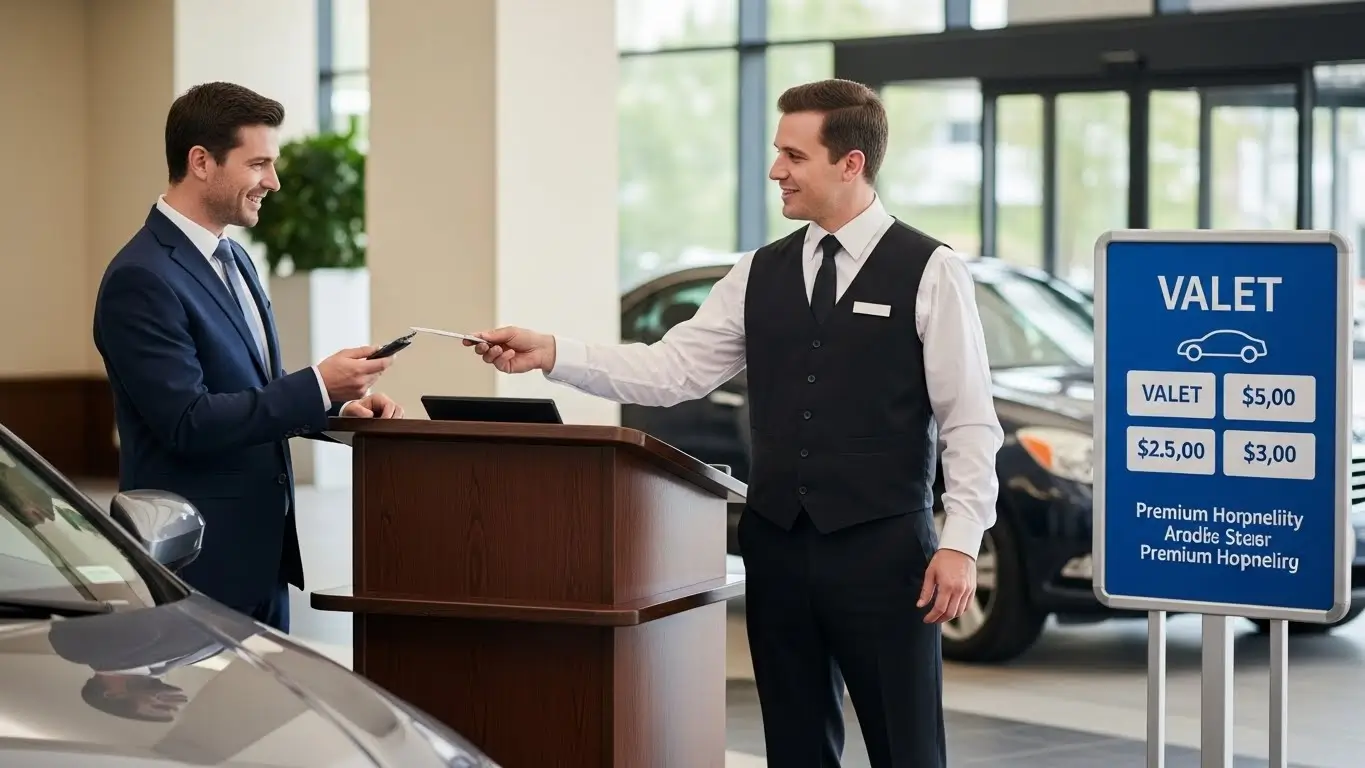
Ever wondered exactly how valet parking turns a chaotic arrival into a seamless experience? It starts the moment you approach the venue. You drive up to the curbside drop-off zone, where a valet greets you warmly. Hand over your keys, grab your claim ticket, and head inside worry-free. The valet then drives your car to a designated parking area—maybe a nearby lot or even a stacked setup for efficiency. When you’re ready to leave, return to the pickup point, show your ticket, and your car appears like magic.
Here's the flow in five simple steps:
Arrival and greeting:
Pull up slowly; the valet signals you in and opens your door.
Key handover:
Give them your keys (use the valet key if available to limit access).
Ticket issuance:
Receive a token or slip that matches your vehicle.
Parking the vehicle:
The attendant secures it in a safe spot, often using radios for coordination.
Retrieval:
Request your car, tip if you like, and drive off.
The Claim Ticket, Key Control, and Retrieval Rules
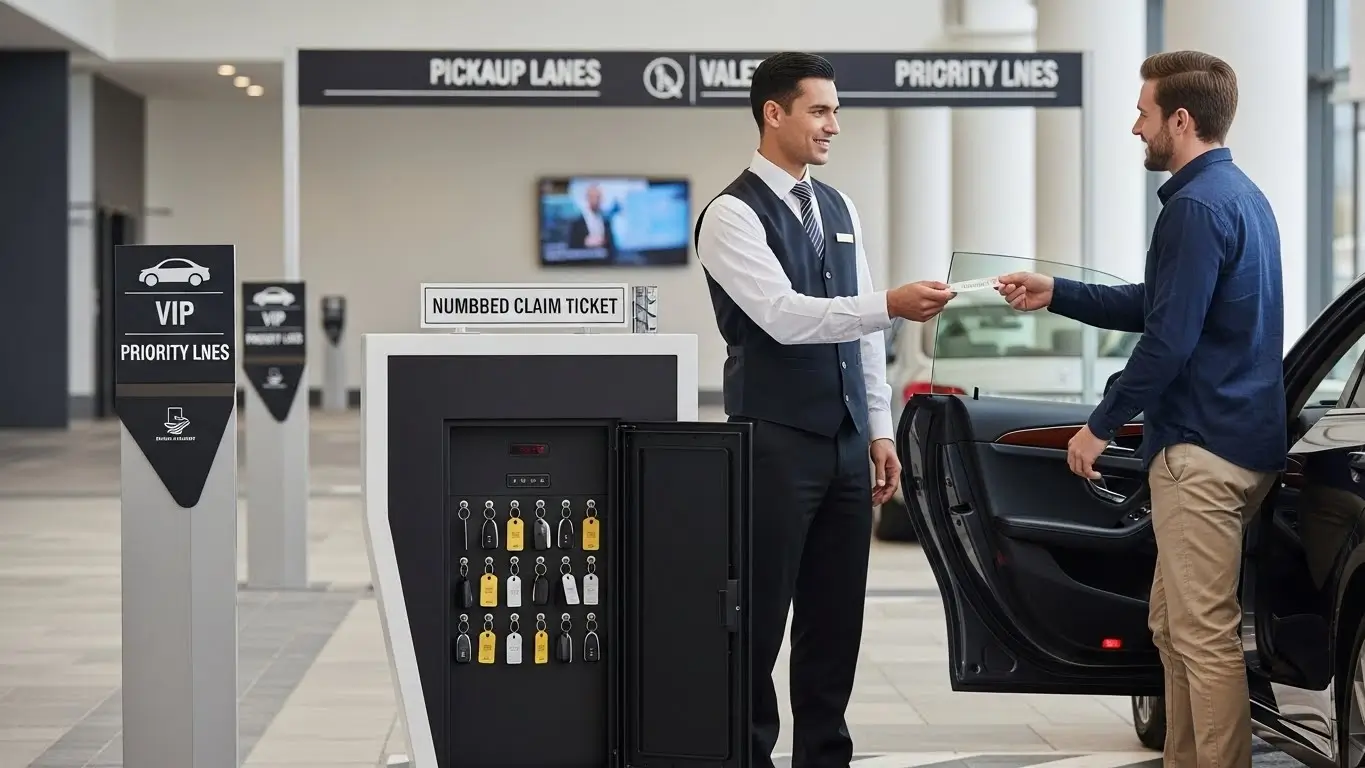
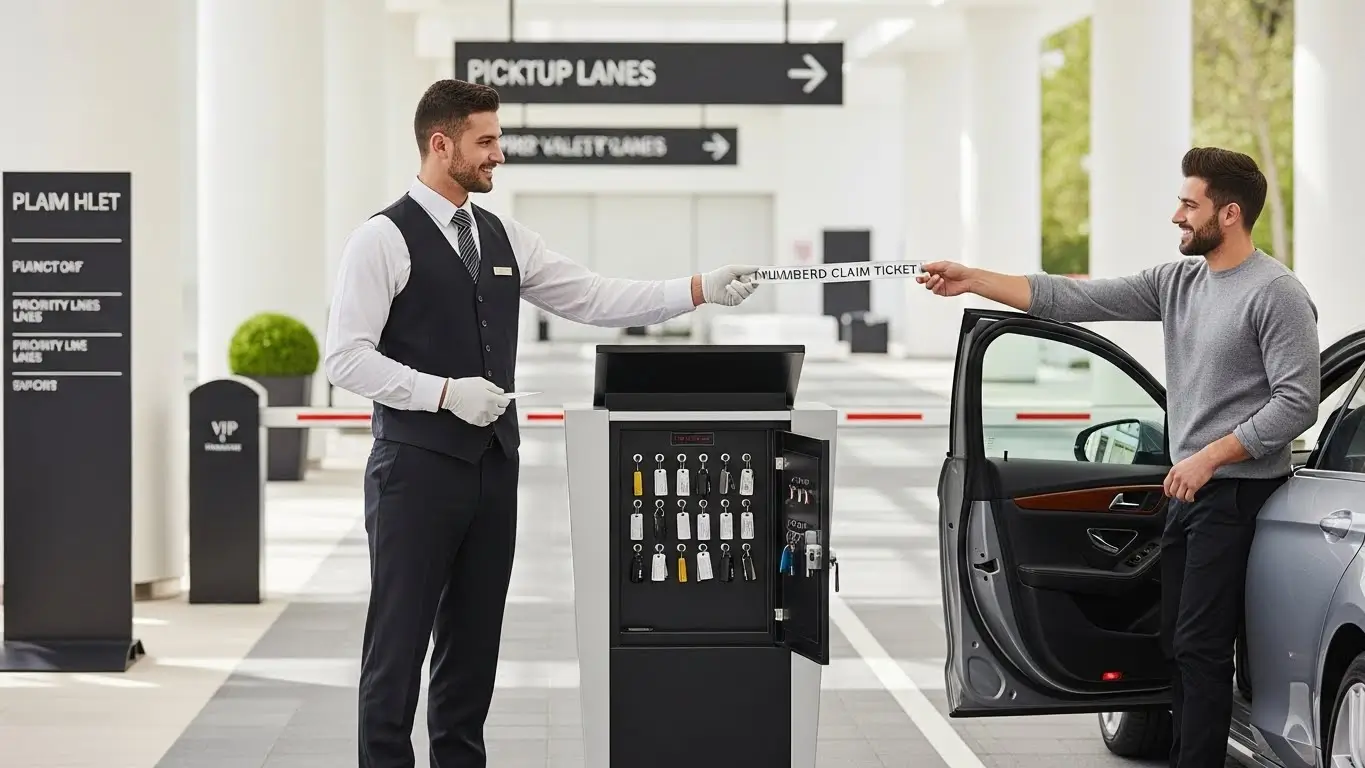
That little claim ticket you get isn’t just paper—it’s your key to a hassle-free exit. When you hand over your car, the valet tags your keys and gives you a matching ticket or token. This ensures they can quickly link you back to your vehicle. Keys go into a secure cabinet or box at the podium, protected from mix-ups or theft. For retrieval, just present your ticket at the pickup point; the valet verifies it and fetches your car pronto.
What if you lose the ticket? Most places have policies like describing your car or showing ID, but it might cost extra. In spots like Dubai, some venues offer standard or VIP options, where VIP might mean faster service or closer parking—think AED 55 for standard at popular malls. Always keep your ticket safe; it’s like a receipt for your ride.
Key access ties into security features, like using a valet key that limits what the attendant can open. For more on that, see our section on valet key or explore equipment details.
Valet Key and Vehicle Security
Many modern cars come with a special valet key—a smart feature that lets the attendant start the engine and drive, but blocks access to locked areas like the trunk or glovebox. This keeps your valuables safe while your car is out of sight. If your vehicle has one, hand it over instead of the full set; it’s a simple way to add peace of mind.
Beyond keys, security involves the whole setup: well-lit parking areas, attendant training, and sometimes even apps for tracking. Remember, venues usually aren’t liable for items left inside, so remove anything important before handover. Security isn’t just about keys—it’s also tied to where cars are parked and how the operation is run. Check out safety and liability or revisit venues.
Venues That Commonly Use Valet Parking
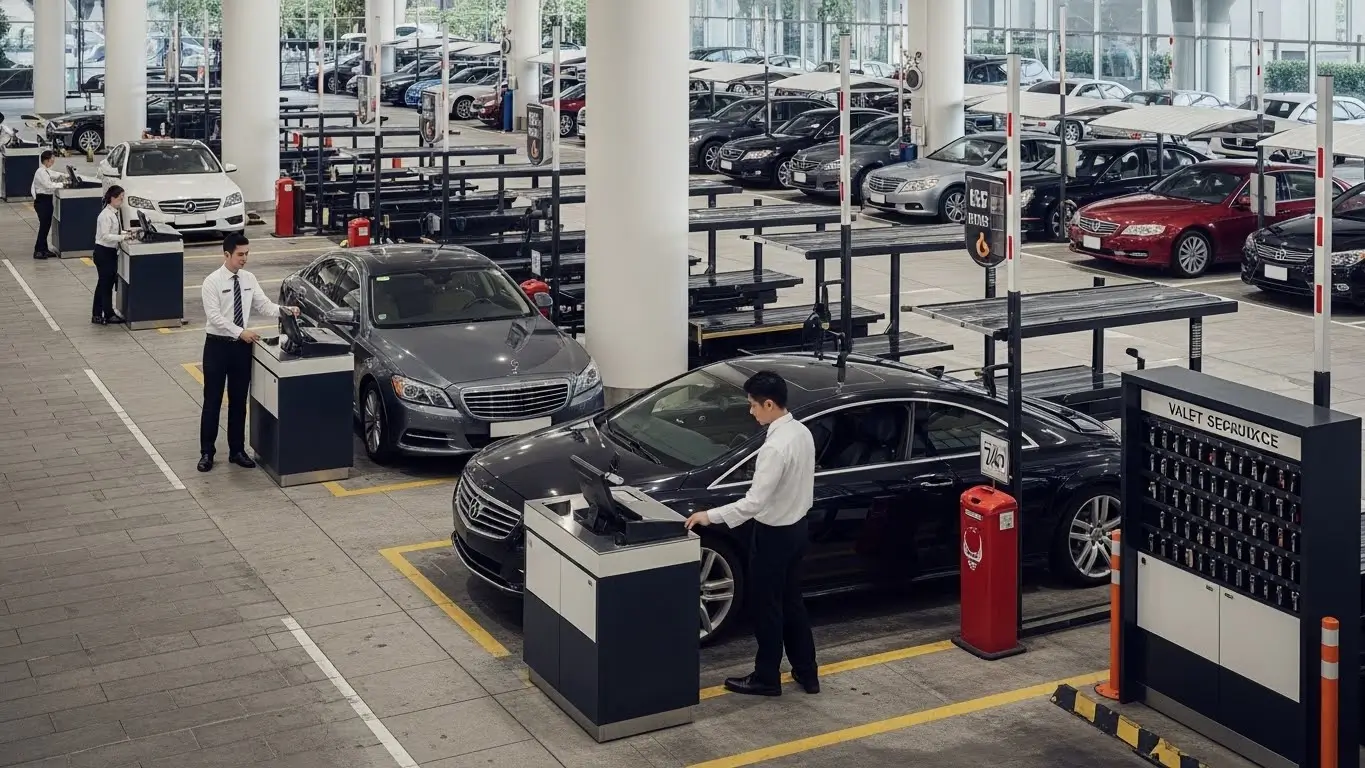
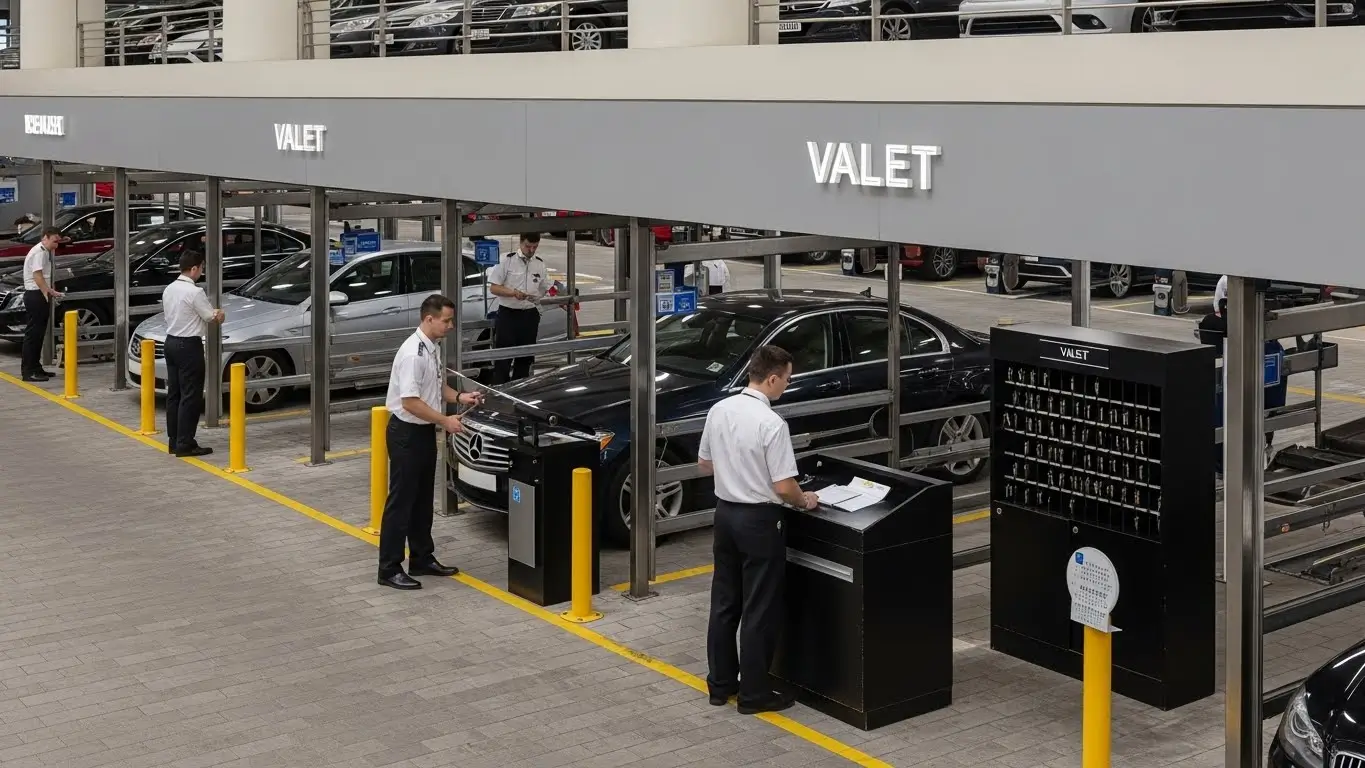
Valet parking pops up where convenience counts, turning potential headaches into easy arrivals. At restaurants and bars, it’s perfect for busy evenings—valets handle peak crowds, parking in reserved lots or even stacked formations to save space. Hotels often provide it round-the-clock, with options like shuttles for distant lots during high season.
Airports offer valet for quick drop-offs, especially at terminals or nearby hotels, while casinos in places like Las Vegas keep it free to lure guests. Hospitals use it to ease stress for patients, parking close to entrances. Malls ramp it up during holidays, managing waves of shoppers in temporary lots. Events like weddings or parties might park in off-site fields, with valets organizing by guest importance.
In Dubai, venues like malls charge around AED 20-100, varying by standard or VIP service. Each spot adapts the setup to fit—queues at events, distant lots at airports. Different venues tweak the tools and team size to match. Learn more about the equipment or the full process.
Valet Parking Equipment and Setup
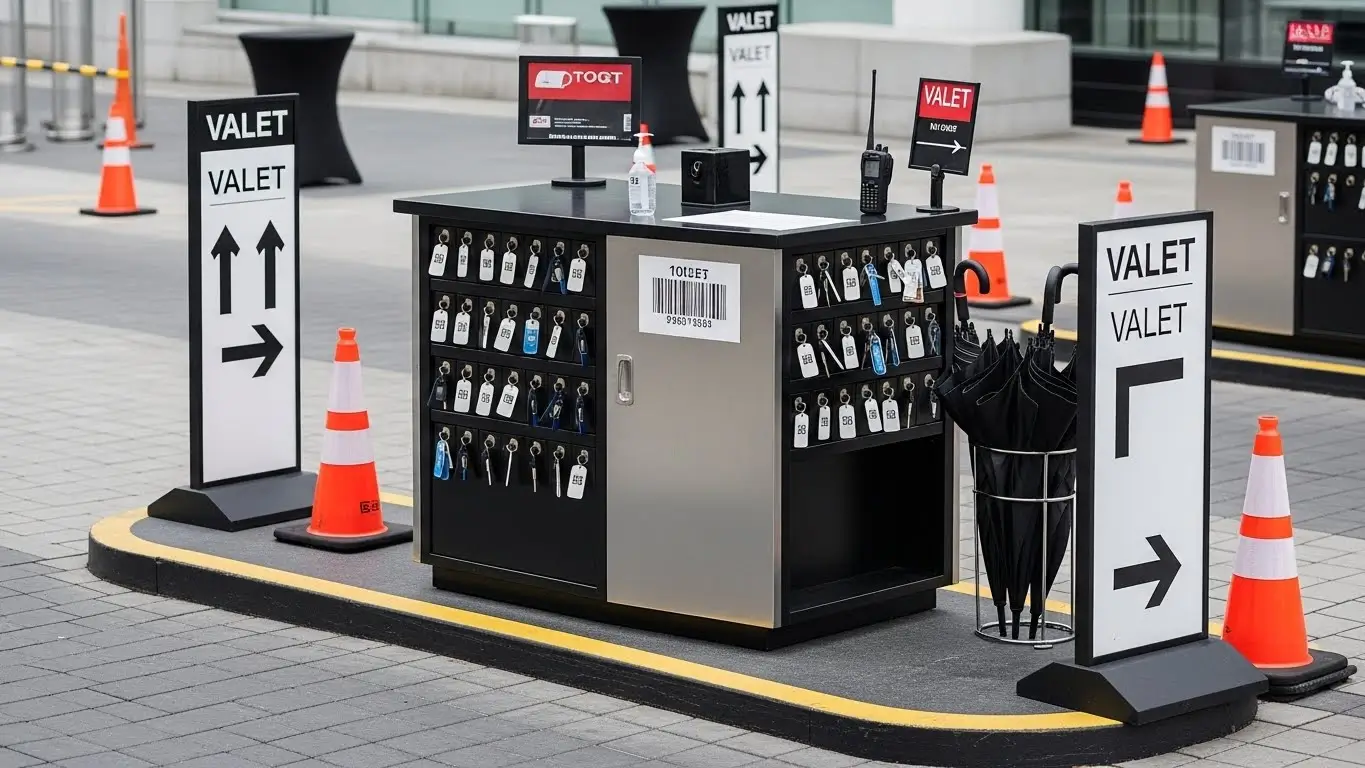
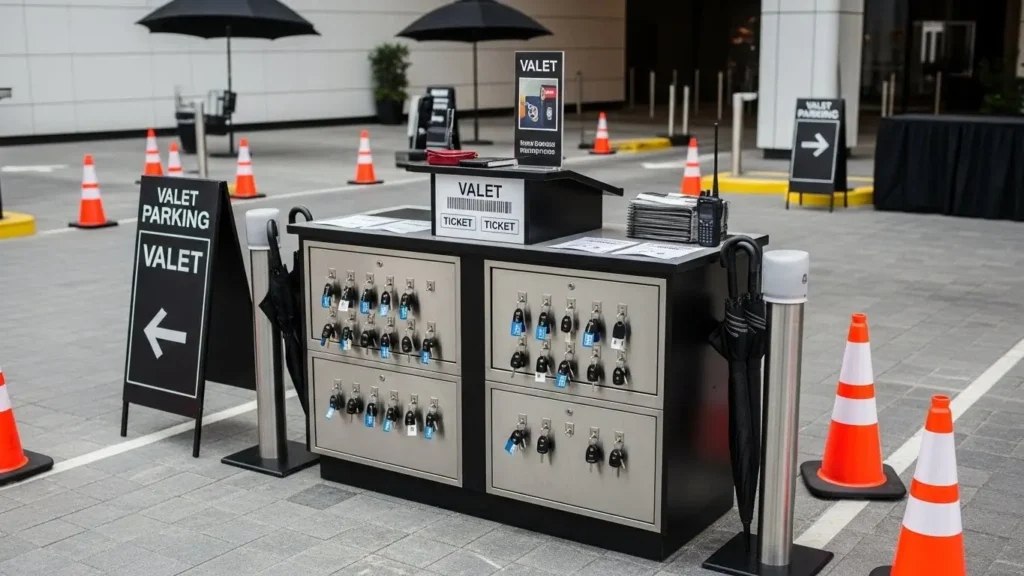
Behind every smooth valet operation is a toolkit that keeps things organized and professional. The podium acts as command central—a sturdy stand with built-in key cabinets holding 100-300 keys, often with locks or even fingerprint access for extra security. Valet tickets, usually numbered or barcoded, match keys to cars quickly.
Other essentials include umbrellas for rainy days, signs and cones to direct traffic, and radios for team communication. Some setups add tip boxes or lights for night shifts. It’s all about efficiency: a good podium bundle might include covers, sign panels, and wheels for easy moving. These parts work together to speed up service while keeping everything secure.
Equipment boosts speed, but rules on safety and responsibility protect everyone involved. See safety details or ticket control.
Beyond keys, security involves the whole setup: well-lit parking areas, attendant training, and sometimes even apps for tracking. Remember, venues usually aren’t liable for items left inside, so remove anything important before handover. Security isn’t just about keys—it’s also tied to where cars are parked and how the operation is run. Check out safety and liability or revisit venues.
Fees, Pricing Models, and Tipping Etiquette
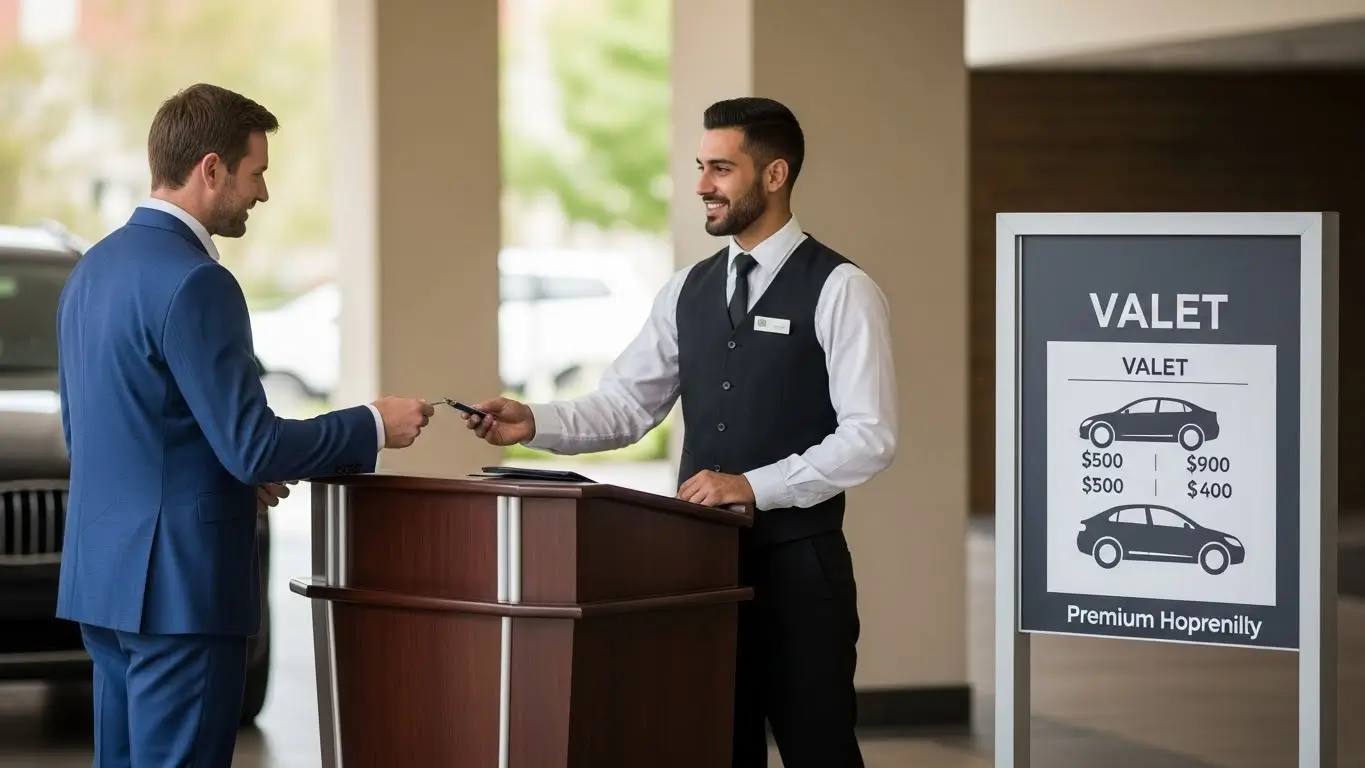
Valet fees vary, but they’re often straightforward: a flat rate like $5-20, or time-based for longer stays. Many venues, especially casinos or hotels, offer it complimentary to enhance your visit. In Dubai, pricing often varies by venue, time, and whether the service is standard or premium.
Tipping shows appreciation—$2-5 is standard in the US when retrieving your car, more for great service. Etiquette is key: be ready with small bills, thank the valet, and avoid rushing them. Clean out trash beforehand, secure valuables, and drive slowly into the zone. For example, if it’s raining and they hold an umbrella, a bigger tip feels right.
Whether it’s paid or free, sticking to etiquette and safety makes valet parking a win for all. Explore fees and tipping, or if you’re in Dubai, consider professional valet services.
Safety, Liability, and What to Do Before Handover
Safety starts with you: before handing over keys, snap photos of your car’s condition, remove valuables, and note mileage. Terms can differ by venue or operator, so check posted conditions and ask what their incident process is. Attendants are trained to drive carefully, and secure zones help prevent issues.
If something goes wrong, report it immediately; most have incident processes. Pedestrian safety matters too—stay alert around drop-off areas. Using a valet key adds another layer. Most questions from new users revolve around these basics, so let’s tackle them head-on. For more, visit safety and liability or tickets.
FAQ
Frequently Asked Questions
It's a service where an attendant parks your car for you, saving you the search in busy areas. Great for restaurants, hotels, and events.
Show it at pickup; the valet matches it to your keys and brings the car. If lost, describe your vehicle or show ID.
Fees depend on venue, duration, and location—free at some casinos, $20-100 in Dubai malls
Be polite, have keys ready, and tip $2-5 on retrieval. Clean your car and secure items first.
Restaurants, hotels, airports, casinos, hospitals, malls, and events
A limited key that starts the car but locks out the trunk and glovebox for security.
Venues handle custody but advise removing valuables; report issues right away.