
Valet Parking Services
Parking management and guest flow with documented handover, key control logs, and calm traffic control across Dubai.
Operating since 2017. Trained, uniformed team. Token-based vehicle tracking.
How to Choose the Right Valet Service
Valet parking is not just “parking a car”. The risks people complain about are usually preventable when the operator runs a controlled system. Information Source from social listening.
Problem signals
If any of these sound familiar, you need an experienced valet operator, not casual attendants:
- No clarity on parking location: guests do not know where vehicles are parked, especially when onsite space is limited.
- Delays and confusion: long retrieval times, queues, or unclear pickup points during peak departures.
Decision criteria
Use these checks to compare valet services before you book:
- Handover clarity: is there a clear intake method, and are vehicle keys tied to a single claim token?
- Key control: is there a sign-in and sign-out log and secure storage?
- Parking policy: onsite only, or defined off-site zones with controlled access and documented handover?
- Traffic control: do they plan drop-off lanes, signage, staff positions, and retrieval sequencing?
- Incident handling: do they explain what happens if something goes wrong, including documentation steps?
Operator verification
What we show and run as standard controls:
- DET licensed Dubai mainland operator and registered entity: SAHIL ZAMAN VALET PARKING SERVICES CO. L.L.C (SZValetParking).
- Operating since 2017 across hotels, restaurants, corporate sites, events, and residential communities.
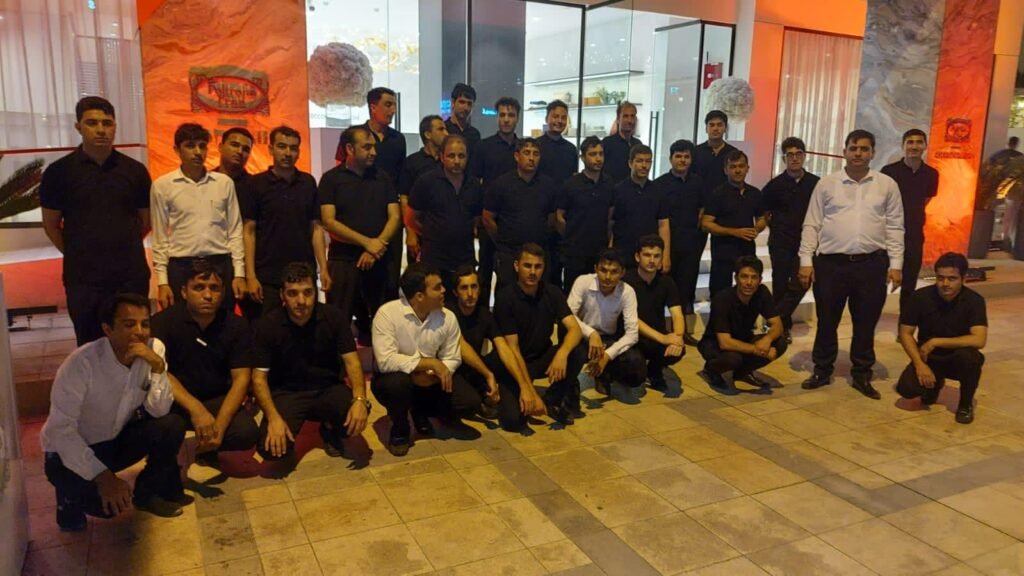
- Trained, uniformed valet attendants with on-site supervision during active service windows.
- Token-based vehicle tracking using claim tickets plus key control logs to reduce mix-ups and speed retrieval.
- Compliance-led setup aligned to venue access rules and local traffic constraints, so the curbside stays controlled and safe.
Operating system
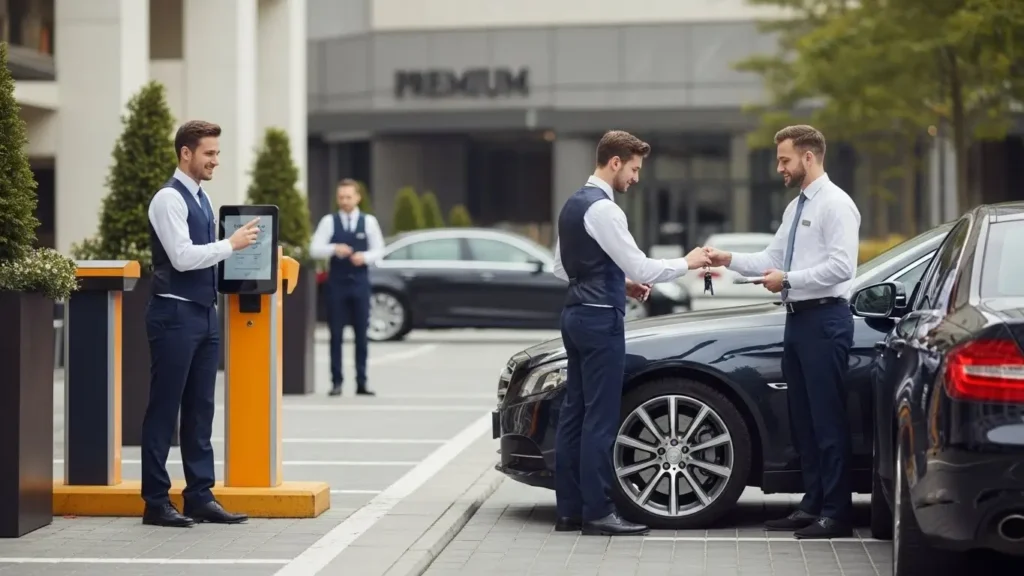
- Drop-off and arrival flow: controlled lanes, clear handover point, guest greeting.
- Key handling and secure logging: keys tagged, logged, stored, and released only against the correct claim.
- Parking allocation: vehicles moved to approved zones based on site rules and access constraints.
- Retrieval and exit wave coordination: call-up order, staging, and queue reduction for peak departures.
- Escalation path: supervisor-led response if there is a delay, dispute, or incident.
Share your venue, date, peak cars per hour, and onsite vs off-site parking. We will reply with a service plan and staffing recommendation.
Choose the valet service you need
Events create short, high-pressure arrival and exit waves, so event valet is built around peak throughput, lane setup, and fast, verified retrieval.
Venues run repeatable rush periods, so venue valet focuses on shift coverage, curb discipline, and consistent guest handling with measurable reporting.
Airports add strict kerb limits and flight timing changes, so airport valet prioritises pre-booking, terminal meeting points, and secure storage with ID-checked release.
VIP and executive arrivals demand privacy and zero-wait pickups, so VIP valet uses reserved staging, discreet comms, and strict chain-of-custody for keys and vehicles.
Events valet services
Best for: Event organisers who need controlled arrivals, calm curb flow, and predictable pickup during peak exit windows.
When guests arrive in waves, the real risk is gridlock, blocked entrances, and slow retrieval that damages the event experience. Event valet should be chosen by throughput needs (cars per peak hour), lane configuration (single, double, or VIP split), parking distance, and the retrieval plan for a mass exit. Our operator verification is built into the system: DET-licensed Dubai mainland operations, running since 2017, with trained uniformed attendants, on-site supervision, and a token claim process matched to key control logs to reduce mix-ups.
- Peak-window plan that protects entrances
- Ordered retrieval with staged vehicle flow
- Traceable handover from claim to key
Venues valet services
Best for: Hotels, restaurants, malls, clinics, and business sites that want consistent service across lunch, dinner, and weekend peaks.
Venue valet fails when operations are improvised: guests wait, pickup points get messy, and off-site parking uncertainty turns into complaints. Choose a venue valet model by service hours (nightly, 7 days, hybrid peaks), entry constraints (roundabouts, shared driveways, bus lanes), parking supply (onsite, basement, partner lots), and the key and claim controls used each shift. Verification should be visible in daily discipline: trained attendants in uniform, supervisor-led lane control, ticketing linked to secure key storage, and shift reconciliation so handovers stay accountable. This hub helps you match the right service level to your venue’s peak profile.
- Stable curbside flow during rush periods
- Clear pickup process that reduces guest friction
- Shift summaries with incident escalation path
Airport valet services
Best for: Travellers and corporate accounts that need fast kerbside handover and flight-aware pickup without terminal confusion.
Airport valet breaks down at the kerb: time limits, no-stopping zones, luggage pressure, and delays create stress fast. The right decision criteria are terminal coverage, meeting-point clarity (door or bay code), communication method (WhatsApp or SMS), and secure storage rules while you travel. Operator verification is about control under pressure: pre-book confirmation, ID and booking-code checks at release, strict key custody, and a process that adapts to flight changes without losing the vehicle location trail. This hub is where you compare service variants like departures, arrivals, and round-trip handling, based on your schedule and storage preference.
- Kerbside handover built for time limits
- Delay-aware pickup planning and updates
- Secure storage with verified vehicle release
VIP and executive valet services
Best for: Hotels, premium venues, corporate towers, and private hosts who need discreet arrivals and priority pickups for high-value guests.
VIP valet requires a different operating standard because the pain points are privacy, zero-wait expectations, and vehicle sensitivity (low clearance, keyless systems, premium interiors). Choose this tier by the handover zone (private entry or VIP porte-cochère), staging method (reserved bay, ready line, call-ahead), and the chain-of-custody controls used for keys and release authorisation. Verification should include dedicated roles, supervisor sign-off, minimal data capture, and etiquette standards that keep the experience quiet and controlled. This hub helps you map the correct protocol to your guest profile, not just add “VIP” as a label.
- Priority staging for near-zero wait pickups
- Discreet handling with privacy-focused comms
- Controlled vehicle care for premium categories
How to choose a valet company
Choosing a valet provider is mainly about control. A good operator can explain how keys move, where vehicles go, how queues are managed, and what happens if something goes wrong. Use the checks below to compare companies in a practical, low-drama way.Key control and handover logging
Most valet problems start with weak key custody. Ask how keys are tagged, stored, and released. A reliable setup uses a claim ticket or booking code that is matched to the vehicle details, then logged at check-in and again at release. Look for simple controls: one handover point, numbered tags, restricted key access, and a shift reconciliation so missing keys are flagged early. If the site is high traffic, ask whether the operator uses a supervisor sign-off for exceptions like lost claims or special vehicle handling.Where vehicles are parked (onsite vs controlled off-site)
Parking location affects risk, retrieval time, and guest confidence. Ask the operator to state their parking policy clearly. If parking is onsite, confirm which bays or zones are used and how overflow is handled. If parking is off-site, it should not be vague. You want defined parking areas, an approved route, and a staging method that keeps retrieval organised. Also ask how they prevent “random street parking” outcomes, and whether they can explain walking distance, access rules, and how vehicles are called forward during peak pickup.Supervision and safe driving standards
Valet is a driving service, so supervision matters as much as staffing. Ask who is responsible on-site, how attendants are briefed, and how driving behaviour is managed in tight spaces. A strong operator sets clear rules: speed control near the entrance, spotters for reversing, no-phone driving, and extra care for low-clearance or premium vehicles. If your venue has ramps, basements, or shared driveways, ask how they handle those constraints. You are not looking for big promises. You are looking for a repeatable standard and a supervisor who can enforce it.
Queue control and retrieval planning
Queues are not solved by “more people” alone. They are solved by lane design and dispatch discipline. Ask how the operator sets up the drop-off lane, where guests queue, and how pedestrians are kept safe at crossing points. For retrieval, ask what triggers a call-forward, how vehicles are staged, and how they handle a mass exit. A good plan includes clear pickup points, radio or dispatch comms, and a simple rule set for prioritising VIP pickups without breaking the general flow. If the venue is on a busy road, ask how they prevent lane spillback.
Incident workflow and escalation
Incidents are rare, but your decision should include the process, not the hope. Ask what happens if there is a delay, a key issue, a guest complaint, or a vehicle concern at handover. A professional operator follows a basic workflow: stop the situation from escalating, record the facts, take photos when relevant, notify the supervisor, and provide a short written log to the client contact. Also ask where the escalation goes next and who is the single point of contact. You want a calm process that produces clear documentation, not finger-pointing or vague “terms” talk.
What’s included in valet services
- Greeting and handover
A controlled drop-off point with a clear welcome, quick instructions, and a single handover flow to prevent curbside confusion. - Ticketing or logging
A claim method that ties the vehicle to the guest request, using a numbered ticket, booking code, or digital log for accurate dispatch. - Key management
Keys are tagged, stored securely, and released only against the correct claim, with basic shift reconciliation to reduce mix-ups. - Parking allocation
Vehicles are placed in approved bays or defined zones based on site rules, walking distance, and retrieval speed, not random convenience. - Retrieval
A call-forward and staging method that brings cars back in an orderly sequence, especially during peak exit periods. - Curb and lane control
Lane setup, cones or signage where needed, staff positions, and traffic awareness so the entrance stays safe and moving.
Service levels explained
- Standard
Best for steady volume sites and smaller events. Covers the core operating system: greeting, claim control, key custody, parking, and retrieval with simple lane discipline. - Premium
Built for busy entrances and stronger peak surges. Adds on-site supervision and tighter flow control, with more structured dispatch, staging, and queue management. - VIP and Executive
Designed for discreet arrivals and priority pickups. Uses protocol-led handling, reserved staging, and controlled handover for high-value guests and vehicles
Pricing and quote factors
Valet pricing is driven by the site, the peak, and the parking reality. To compare providers fairly, ask them to quote using the same inputs:
- Cars per peak hour
Your peak 15 to 60 minutes matters more than the total guest count. - Parking distance and access
Onsite bays vs partner lots, ramps or basements, walking distance, and the route used for staging all affect staffing and timing. - Entry lanes and traffic conditions
Busy roads, shared driveways, roundabouts, loading conflicts, and no-stopping zones change the lane plan and marshal needs. - Time window and staffing
Start and end times, surge windows, late-night coverage, and whether you need a supervisor on site. - Special handling (VIP arrivals)
Split lanes, priority retrieval, discreet pickup points, and dedicated attendants can change the service tier. - Approvals or site rules
Security gates, access permissions, venue operating rules, and restricted areas can add setup requirements.
Valet options by event and venue
Different use cases create different risks. Use these links to move from general “valet services” into the exact operating model you need, without guessing.
Popular event types
- Weddings valet services (arrival waves, VIP handling, tight pickup timing)
- Corporate events valet services (executive arrivals, predictable throughput, reporting)
- Conferences valet services (session breaks, staggered pickups, multi-entry control)
- Exhibitions valet services (high volume, long service windows, overflow planning)
- Parties valet services (short peaks, busy streets, fast retrieval expectations)
Popular venue types
- Hotels valet services (check-in peaks, porte-cochère discipline, guest-first flow)
- Restaurants valet services (dinner rush, limited curb space, quick turnover)
- Malls valet services (high traffic, multiple access points, queue stability)
- Hospitals valet services (accessibility support, safety, clear handover rules)
Proof and verification
If you are comparing valet companies, ask for proof of systems, not slogans. These assets show whether the operator can run consistent control during real peak conditions.
SOP checklist snapshot
- Site walk-through and entry plan confirmed before service starts
- Handover point set and staff roles assigned (greeter, runner, marshal, supervisor)
- Claim method active and linked to vehicle details for dispatch accuracy
- Keys tagged, stored securely, and reconciled at shift end
- Parking zones defined, overflow trigger agreed, and staging route confirmed
- Queue and pedestrian safety controls active at the curb
- Incident log process ready with a single escalation contact
Mini case studies
Case study 1: Corporate gala at a hotel
- Challenge: Short curb bay, heavy arrival peak, VIP list, basement access constraints
- Approach: Split lane setup, on-site supervisor, claim tickets tied to key control logs, staged retrieval queue
- Result: Smoother curb flow, faster pickup during exit wave, fewer guest escalations at the entrance
Case study 2: Weekend dinner rush at a restaurant
- Challenge: Busy street conditions, limited stopping time, fast turnover expectations
- Approach: Defined handover point, marshal-led lane control, parking allocation by zone distance, simple call-forward staging
- Result: Reduced lane spillback, quicker vehicle returns, fewer complaints about confusion at pickup
Case study 3: Conference at a multi-entry venue
- Challenge: Session breaks created staggered peaks, multiple pickup points, overflow risk
- Approach: Pickup point signage, role-based radio comms, supervisor dispatch, overflow activation rules, shift reconciliation
- Result: Better pickup accuracy, steadier queue lengths, fewer lost-claim disputes
FAQ
Cars are parked in the agreed parking inventory for the site. A professional operator defines zones in advance and explains how staging works for pickup.
It depends on the venue’s parking supply. The key is clarity: onsite bays, partner lots, or overflow zones must be defined, not improvised.
Look for procedural controls: clear handover point, condition notes when needed, supervised parking routes, and documented claim-to-key release.
Keys should be tagged, stored securely, and released only against the correct claim or booking code, with reconciliation at shift change or close.
Yes, VIP and executive handling is a separate tier with priority staging, discreet comms, and tighter chain-of-custody controls.
A calm workflow is best: supervisor takes control, facts are recorded, photos noted when relevant, the client contact is updated, and a short report is logged.
High-traffic handling is mainly lane design, staffing ratios for the peak window, and disciplined dispatch, not just “more attendants.”
Premium and high-peak setups should include on-site supervision to manage lane control, dispatch decisions, and escalation.
Venue type and address, service window, peak cars per hour, parking distance and access, entry lanes and traffic constraints, and any site rules.
Yes, recurring service models are built around predictable rush periods, shift coverage, and performance reporting.